The primary metric linking subsurface performance with surface facilities remains the Steam-Oil-Ratio (SOR). Sustained reductions in SOR unlock potential and lift project economics, but achieving this requires integration between reservoir management, steam delivery, and measurement systems. Precise control of steam injection with careful balance of production to manage subcool and wellbore integrity. In this context, measurement accuracy of high-pressure steam is not a standalone instrument issue, but a system component that directly impacts reservoir performance and energy consumption. These challenges grow as pad development pushes several kilometers away from the central facility.
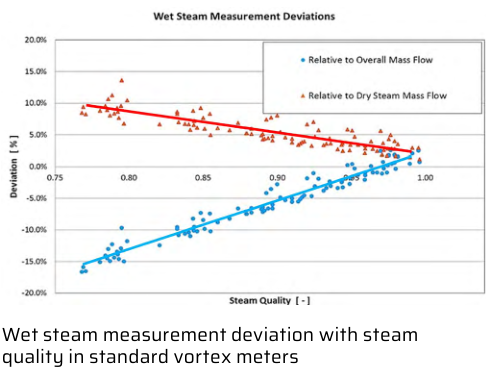
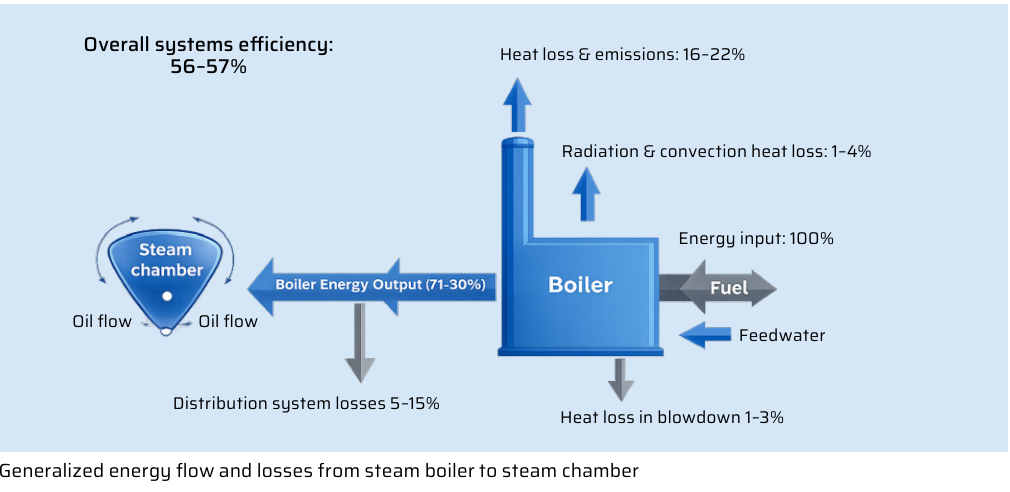
Conventional orifice plates and flow nozzles are wildly inaccurate with liquid hold-up. In more challenging low-flow or multiphase flow, where wet steam is in stratified flow with steam condensate, vortex meters also suffer. Field observations indicate measurement deviations of up to 15% at steam quality of 85%. Vortex meters over-read the gas phase of the line while under-reading the overall mass flow injected. For a 33,000 bpd facility, this represents potentially 12,000 bpd of misallocated steam, translating into larger cumulative field SOR. The innovation of dryness fraction measurement and mass flow compensation in advanced vortex meters significantly reduces error in compensated steam flow output. On the field side, physical audits of the distribution system help identify where to add steam traps, catch leaks, recover condensate, and upgrade insulation. Together, these steps reduce system losses from the system.
Integrating Instrumentation and Solutions
Environment Emissions
- CEMS
- Gas analysers
- Dust measuring devices
- Air quality measuring devices
- Data acquisition and handling
- ESG compliance and reporting
- Preventative maintenance support
Fuel & Flue Gas Measurement
- Formerly SICK Ultrasonic
- Flow meter with associated sensors and piping
Steam & Condensate Management
- Annual steam trap audit service
- Control valves
- Feedwater monitoring
- Condensate and heat recovery
- Retrofit and modernization
Energy Monitoring
- Fuel quality and consumption
- Boiler benchmarking
- Remote monitoring
- Digital twin
- Economic impact and ROI
- Performance monitoring
- Reporting
At the central facility, boiler optimization is a good example of how integration pays off. When chemistry, combustion, and controls work together, you can get quick step-change improvements. Real-time monitoring of feedwater quality, oxygen trim systems, and tuning blowdowns are some examples. Real-time monitoring of key water chemistry parameters such as pH, conductivity, and hardness enables dynamic adjustment of treatment processes, reducing chemical consumption and mitigating scaling risks.
Modern liquid analysis instrumentation with advanced digital diagnostics enhances measurement confidence and provides reliable inputs for both operator decision-making and emerging AI-driven control systems. In parallel, oxygen trim systems allow tighter control of air-fuel ratios with zirconium oxide sensors, improving combustion efficiency and reducing fuel consumption. Enhanced water treatment practices can reduce baseline blowdown rates by 3–4%, while conductivity-based automated blowdown control systems can further reduce energy and water disposal losses by up to 20%. Collectively, integrated control strategies can deliver annual operating savings on the order of $50K to $100K per intervention, alongside reductions in fuel usage, chemical consumption, and carbon emissions.
Beyond boiler optimization, longer-term value is unlocked through coupling energy recovery with plant de-bottlenecking projects. Heat recovery from flue gas to preheat feedwater or adding deaeration systems, and reintegrating waste energy streams can improve overall system efficiency. These projects typically achieve payback periods of less than two years, reinforcing the economic case for integrated design approaches. Most plants have emissions monitoring systems for compliance. The same readings can be used as a live diagnostic tool for boiler performance. Emissions data gives direct insight into combustion quality, heat losses, and inefficiencies. Predictive AI-models using CEMS data can recommend actions, if not automate process tuning.
At Intrepid Group, we develop assessment tools to identify efficiency gains. We can build a system optimization roadmap that fits easily into long-range planning. We have also turned our field experience into site programs that go beyond inspection or verification so you can get more from on-site consultation. At a recent facility audit of less than 200 steam traps, we identified over $269,000 of annual steam losses and significant associated CO₂ emissions.
To learn more or request a quote, contact us today at sales@intrepid-group.ca.